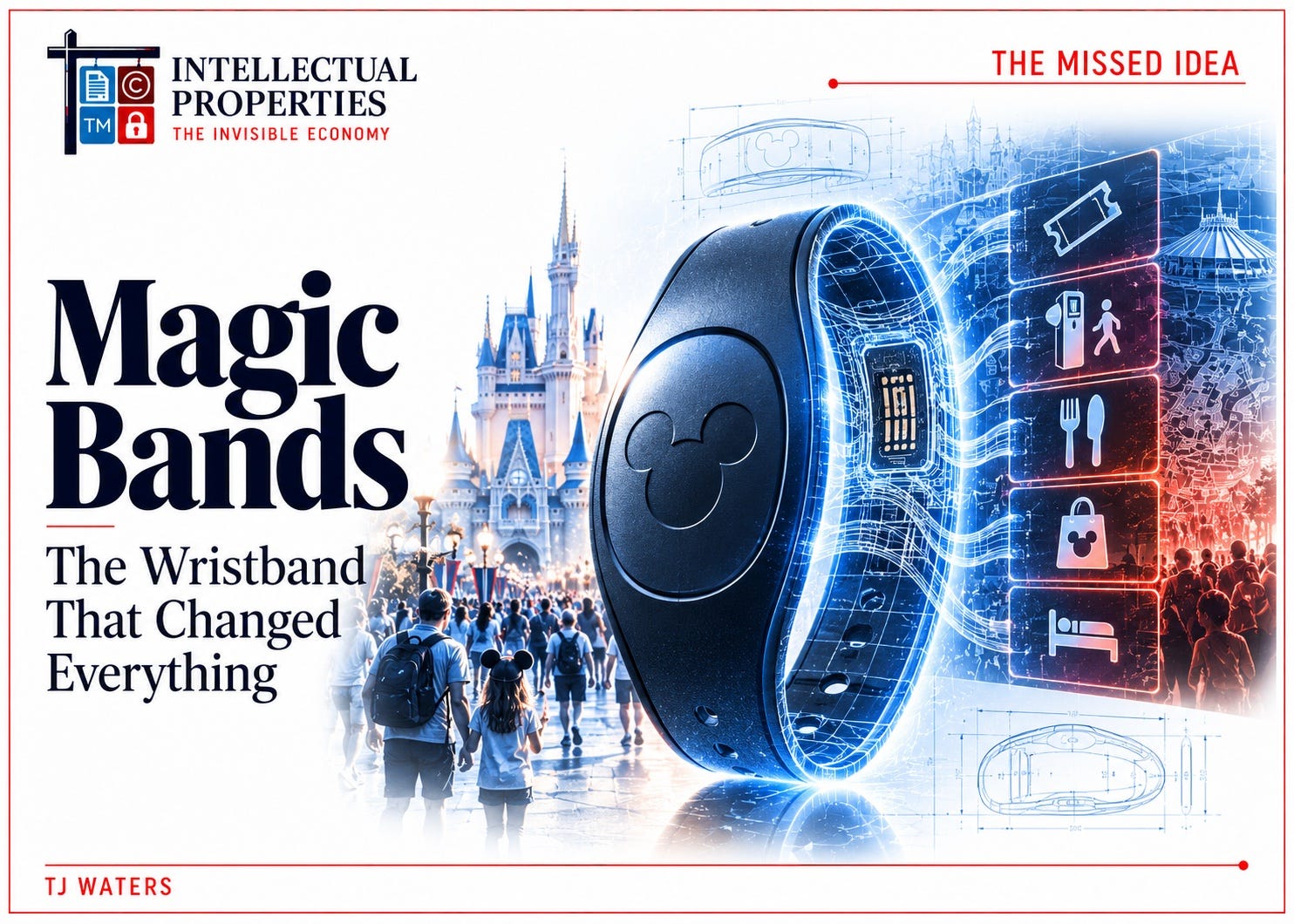

Walk through the gates of Walt Disney World and you’ll see millions of colorful silicone wristbands wrapped around the wrists of children, parents, grandparents, and annual passholders.
They unlock hotel rooms. They open park entrances. They pay for lunch. They summon photographs from roller coasters. They glow during fireworks. They vibrate during interactive adventures. They have become so commonplace that most guests barely notice them. That is usually the fate of great innovation. Once it becomes indispensable, it becomes invisible.
Long before the MagicBand became a symbol of the modern Disney experience, undergraduate engineering students at the University of Florida were given what appeared to be an ordinary capstone assignment. Design a wearable hardware device. They returned the following semester and developed software to go with their new gizmo.
At first glance, it looked like any other sponsored design project, the kind completed every year by engineering students across America. In retrospect, it became something else. It became a reminder to corporate America that universities don’t simply produce graduates. They can produce incredibly profitable devices.
Universities measure themselves by the number of students they educate, the papers they publish, and the research dollars they attract. Industry measures success differently. Companies ask whether a new idea reduces costs, increases revenue, or creates an entirely new market. Sponsored engineering programs occupy the rare space where both worlds overlap. Students receive an education. Companies receive fresh thinking. Occasionally, both receive something neither expected.
The MagicBand illustrates what happens when those incentives align.
Undergrad Prototyping
The idea for the band was conceived by a Disney executive reading a SkyMall catalog on a flight, where he spotted a golf tracker wristband and thought it would be a good concept to include as part of their “Next Generation” project. So, he approached the University of Florida’s Herbert Wertheim College of Engineering.
The Integrated Product & Process Design (IPPD) program is an experiential two-semester capstone course where multidisciplinary student teams design, build, and test prototypes for industrial sponsors. The program has existed for twenty-five years and is one of the most popular classes in the college.
The initial tasking was in 2009, comprising of instructions to “Design a customer-facing location-aware mobile device application designed to enhance park guest experience.” The initial prototype was big, bulky, and not something a customer would want to wear, much less wear it while walking through a theme park. But it was, after all, a prototype. Executives decided to see what the students could do next.
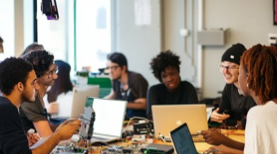
Undergraduate engineering students.
The following semester the students were invited to take their prototype and “Implement a system that provides an interactive guest information system built into the tabletop at a food & beverage restaurant location and supports theme park information, menu info, and personal guest info, (Photopass, Fastpass).” The student’s demonstrated several concepts that executives agreed would enhance the customer experience.
By the time Disney introduced the MagicBand to guests in 2013 as the centerpiece of the MyMagic+ ecosystem, the wristband had evolved far beyond a simple wearable device. It had become the physical interface to an entirely new operating system for Walt Disney World.
One piece of technology now replaced paper tickets, hotel room keys, credit cards, FastPass reservations, PhotoPass cards, dining confirmations, and countless other fragments of the guest experience. With a simple tap of the wrist, the entire vacation became connected. Disney wasn’t merely simplifying admission into its parks. It was redesigning how guests interacted with every aspect of the resort. Many observers focused on the wristband itself. Strategically, that was the least interesting part of the innovation.
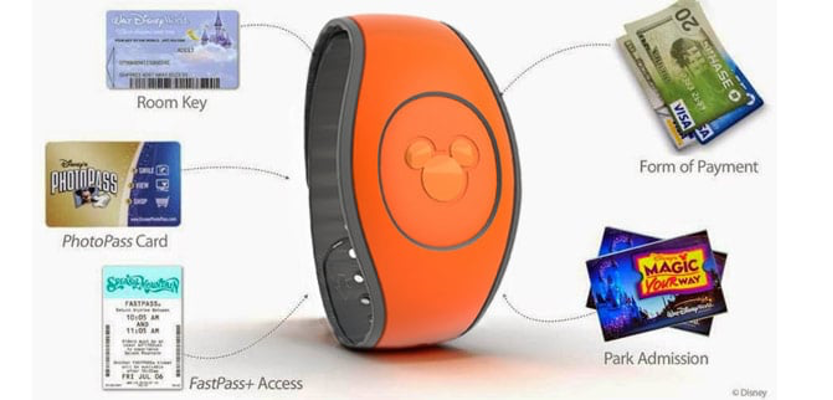
Marketing materials developed by Disney.
The real innovation was the invisible systems behind it. Every interaction generated data. Every attraction visited, every restaurant selected, every purchase completed, every photograph taken, every hotel door opened, every queue entered, and every pathway traveled quietly became another data point. Disney had not simply created a wearable device. It now has a digital twin of the guest’s entire visit. That changes everything.
For decades, theme parks operated much like shopping malls. Managers could estimate attendance and revenue, but they understood relatively little about how individuals or families moved through the environment. The MagicBand transformed that uncertainty into measurable intelligence. Disney could study guest behavior with a level of precision previously reserved for digital companies.
Amazon could observe what customers clicked. Netflix could observe what subscribers watched. Spotify could observe what listeners played. Disney could now see how families physically experienced a destination measured in thousands of acres. With Magic Bands, movement through the park became a digital information source.
The brilliance of the system was that guests experienced it as a convenience rather than surveillance. Every eliminated inconvenience made the vacation feel more magical. Every magical moment generated another stream of behavioral insight. The better the experience became, the more valuable the underlying data became. Customer satisfaction and operational intelligence reinforced one another in a continuous feedback loop.
That is not a wearable. That is a platform.
Design 2.0, 3.0, 4.0, ...
Some people will read this and think a bunch of students took away jobs from designers working for local companies, or even Disney itself. Quite the opposite is true. A small engineering class in Gainesville, Florida created new work for designers, developers, and engineers (literally) across the country.
At the beginning, MagicBands cost more than $35 each just to make them. The original design was contracted out to one of the more famous specialty design companies, called Frog. Designers there worked with the legendary team of Disney Imagineers to come up with a final design that dropped the price down to only $5 each.
The design of the electronics was done by Synapse Product Development in Seattle, WA, a long-established engineering developer for Disney. The wearables are made from Thermoplastic Polyurethane (TPU), a protein free hypoallergenic that holds up well to water, sunscreen, and the wide-ranging scented menagerie people frequently have on their skin while vacationing.
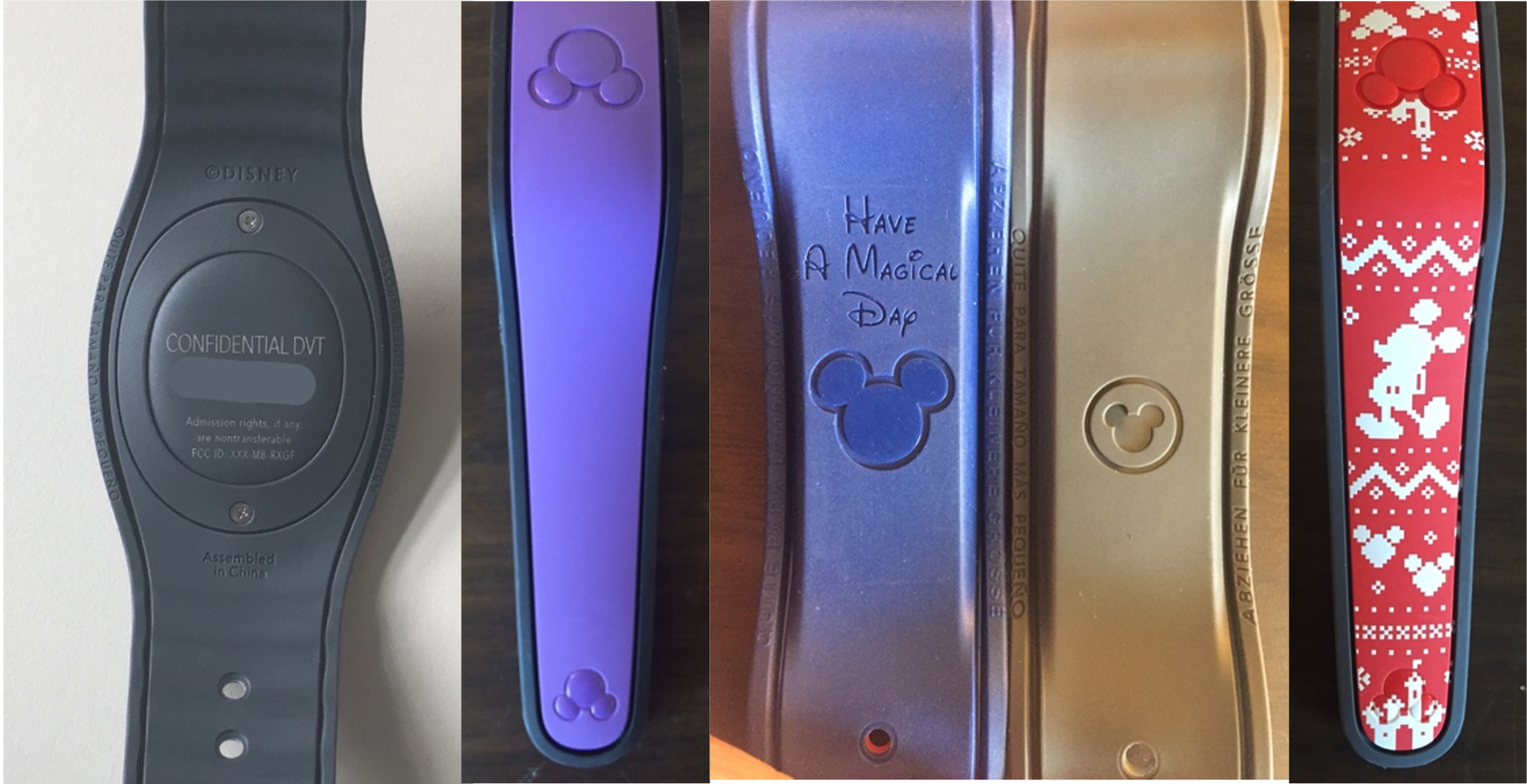
A handful of the many prototype MagicBands Disney developed.
The job of connecting the devices to the various connections throughout the Disney parks fell to Level 11, also out of Seattle. Their software development ensured data was collected, stored, and ultimately analyzed to provide the decision-making support the corporation was looking for to maximize the customer’s experience.
Jabil Circuit, out of St. Petersburg, FL was retained to manufacture the MagicBands at scale. Jabil is the second largest contract electronics manufacturer in the world, building components, systems, and final assembly products for global brands including Apple, GoPro, and Cisco.
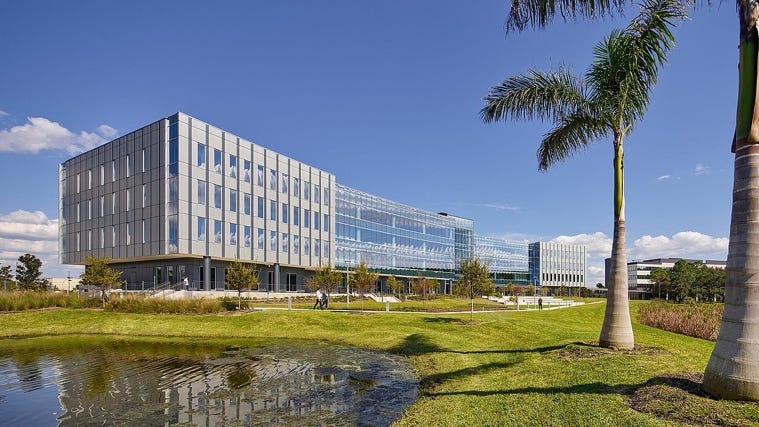
Jabil’s Global Headquarters & Innovation Labs in St Pete, FL
The Disney Design Group in Orlando, Florida handled much of the art and design for the customized MagicBands featuring Disney, as well as other company’s trademarked characters, franchises, and other intellectual properties.
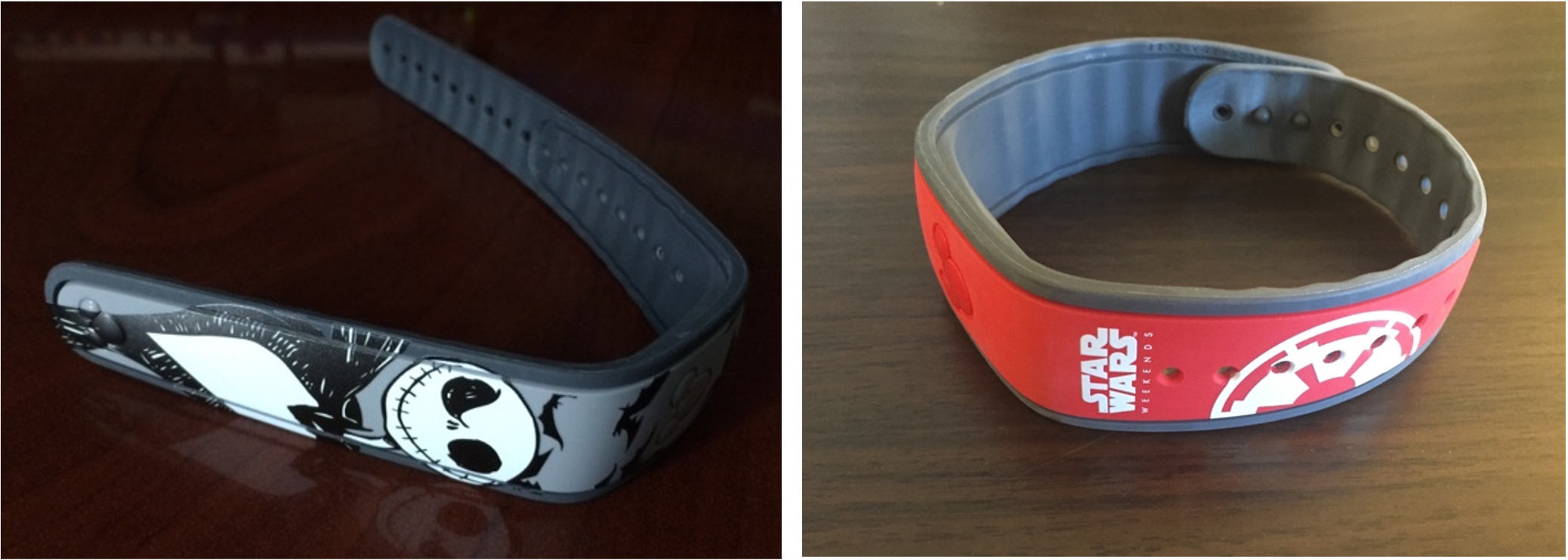
Disney created numerous specialized MagicBands for various franchises.
Disney is a company that takes its packaging more seriously than most companies, and it retained InFold, Ltd, in Rhode Island to create the foundation for how customers would first encounter the MagicBand.
The Platform
The evolution of the MagicBand demonstrates a principle that universities rarely teach explicitly: successful products almost never stop evolving after launch. The original MagicBand authenticated customer identity, enabled payments, opened hotel rooms, and simplified access throughout the resort. Later generations expanded the platform even further.
MagicBand+ introduced rechargeable electronics, lighting, vibration, gesture recognition, and interactive experiences that allowed the wristband itself to participate in attractions, nighttime spectaculars, and immersive storytelling. The hardware had quietly become another Disney character.
Even more interesting was the commercialization strategy surrounding the product.
Initially, the wristband functioned as infrastructure. Eventually, it became merchandise.
Disney’s extraordinary portfolio of intellectual property transformed a functional device into a collectible product line.
Guests could purchase designs featuring Marvel superheroes, Pixar characters, Frozen, Toy Story, Haunted Mansion, Disney Villains, seasonal celebrations, anniversary editions, and countless limited releases. The underlying electronics changed very little. The intellectual property layered on top of them changed constantly.
One manufacturing platform suddenly supported hundreds of retail products, each carrying its own emotional appeal while sharing nearly identical production economics. The wristband itself became another licensing canvas. This is where the engineering story becomes a business story.
Too often universities evaluate sponsored projects by asking whether a prototype worked. Industry asks a much more interesting question. Did the prototype become a platform? A prototype solves one problem. A platform enables hundreds of future solutions.
Viewed through that lens, the MagicBand represents something far larger than a successful engineering project. It illustrates how a multidisciplinary student experience can contribute to a commercial ecosystem that continues generating value years after graduation.
Industrial designers refine the human experience. Manufacturers optimize production. Software developers expand capabilities. Intellectual property transforms functionality into emotional connection. Data scientists improve operations. Marketing creates demand. Finance scales the model. Every discipline compounds the work of the one before it.
Innovation is rarely an individual achievement. It is usually a relay race.
For IP managers, that may be the most important lesson. The purpose of sponsored research projects is not merely to help students graduate. It is to expose them to problems significant enough that solving them changes the trajectory of an organization. Occasionally, those organizations are one of the most successful entertainment companies in the world.
But more often sponsoring companies are startups, regional manufacturers, hospitals, utilities, or nonprofit organizations. The size of the sponsor matters less than the quality of the problem. Students remember projects. Companies remember students. More importantly, companies get to know students beyond simply a name on a resume. By being involved in these projects they can see which students are a good cultural fit for their company. That reduces turnover, which saves money!
If the story of the MagicBand teaches us anything, it is this: The most valuable outcome of an engineering course is not the grade. It is the possibility that an idea born in a classroom can reshape an entire market. Every sponsored project contains that potential. Most never realize it. But the few that do become case studies. Corporate managers should consider how this low-cost initiative paid off.
Each of the two semesters at UF cost Disney $15,000. With over 40,000,000 MagicBands sold that is over one billion dollars in follow on revenue - not park tickets, not hotel rentals or food purchases, not even merchandise. A billion dollars in top line additional revenue - from a bunch of undergrad engineering students in a capstone class.