
Taylor Swift had an ownership problem. The recordings that made her famous, (the master recordings of her first five albums), belonged to someone else. When Big Machine Label Group was sold in 2019, those masters went with it.
Swift could still own or control rights in the underlying songs, but the familiar recordings themselves were another piece of property entirely. The U.S. Copyright Office explains that a musical composition and a sound recording are separate copyrighted works, often owned and licensed separately. So Swift found the seam between them and pried it wide open in a way nobody had ever done before.
She announced that she would simply record her songs again. New performances, therefore new sound recordings, resulting in new masters for the same songs. Radio stations and streaming companies that wanted her support would have to use the new recordings. The strategy became the Taylor’s Version project; re-recorded albums she released between 2021 and 2023.
But here is the question: What if somebody had patented that idea?
Not Taylor Swift. The idea.
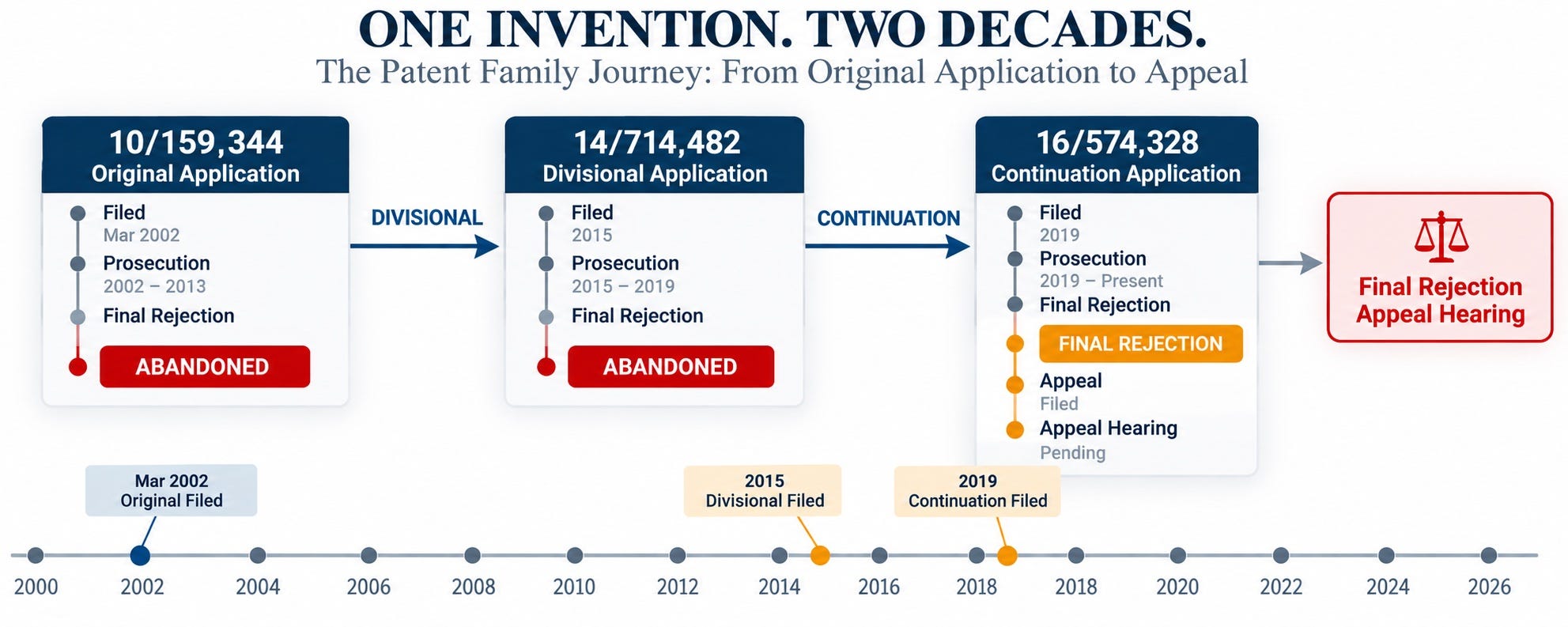
A while back, I wrote about a patent application that came uncomfortably close to this neighborhood. Music financier David Pullman, (best known for the so-called Bowie Bonds), pursued a continuation application, U.S. Patent Application No. 16/574,328, directed to creating a pool of intellectual-property assets for securitization.
The timing was curious. Swift publicly discussed re-recording in the summer of 2019. Pullman filed the continuation in September. The application claimed priority through a chain reaching back to 2002. In my original AIPLA article I wondered whether the suddenly valuable idea of replacing old masters with newly created ones might have been somewhere in the strategic background.
There is no evidence that Pullman actually tried to patent “Taylor’s Version,” and his claim was not written that way. The interesting part is the missed idea hiding beside the application: Could someone have patented a repeatable business process for using newly created masters to alter the economics of an older catalog?
The Patent That Wasn’t
A patent cannot simply claim, “Artist dislikes record deal, artist re-records album, artist makes more money.” Patent law is not a reservation system for clever business ideas. Under 35 U.S.C. § 101 and current USPTO guidance, claims directed merely to abstract ideas, (including many methods of organizing human activity), often fail eligibility unless the claim as a whole adds something more.
But imagine the filing in 2002, before streaming remade the industry. The applicant does not try to patent singing the songs again. Instead, the claims describe a system: Identify a catalog whose original sound recordings are controlled by another party; determine when contractual re-recording restrictions expire; create replacement masters; register and distribute those new recordings; redirect licensing opportunities toward the replacements; bundle the resulting royalty streams; and use the new catalog to change the economic value of the old one.
Now it starts sounding less like revenge and more like a method.
Would it have survived examination? Maybe not. Novelty, obviousness, written description and patent eligibility would all have been serious hurdles. And today’s eligibility framework is especially unforgiving toward claims that amount to a business strategy performed with generic technology. The USPTO itself notes that business methods are not categorically excluded, but they still must clear the judicial exceptions governing abstract ideas.
Still, that is what makes this a Missed Idea. The question is not whether a broad patent on re-recording music should have issued. The question is whether somebody, early enough, could have recognized that the valuable invention was not the new recording, but instead the economic architecture around it.
The Invisible Asset
Swift demonstrated something the music business had largely treated as a contract footnote: a re-recording right can become a strategic asset. A new master does more than create another copy of a song. It can create a competing asset that is controlled by the artist. Fans can choose it. Streaming can favor it. Film, television and advertising licensors can potentially choose it. And every dollar flowing toward the replacement affects the bargaining power surrounding the original.
That is the invisible economy underneath Taylor’s Version. Copyright supplied the raw material. Contract law supplied the timing. Brand loyalty supplied the demand. Distribution platforms supplied the scale. The innovation was seeing those pieces as a system.
Swift later wrote that the success of the Taylor’s Version albums and The Eras Tour helped make it possible for her to buy back her music. In 2025, she announced that she had ultimately purchased her original masters outright. She said the saga had changed contract negotiations for younger artists, with new artists telling her they negotiated to own their masters. Her strategy did not merely produce replacement albums. It changed what artists knew to ask for. Her own account of it all is here.
And That May Be the Bigger Miss
Patents expire. Contract language evolves. Business models get copied. The most valuable ideas sometimes escape protection because nobody recognizes what they are until everyone can see them.
Pullman’s ’328 application was rejected, appealed, and ultimately abandoned. My earlier article followed that strange patent trail because its 2002 priority claim seemed to reach into a music economy that did not yet exist. But the more interesting possibility is the claim nobody appears to have owned; the deliberate conversion of an artist’s re-recording right into a mechanism for shifting licensing demand, catalog value and negotiating leverage.
Taylor Swift did not need that patent. She had something better: Taylor Swift.
For everybody else though, the lesson is worth remembering. When an industry-changing strategy looks obvious in hindsight, there was usually a moment when it wasn’t.
That is where patents live.